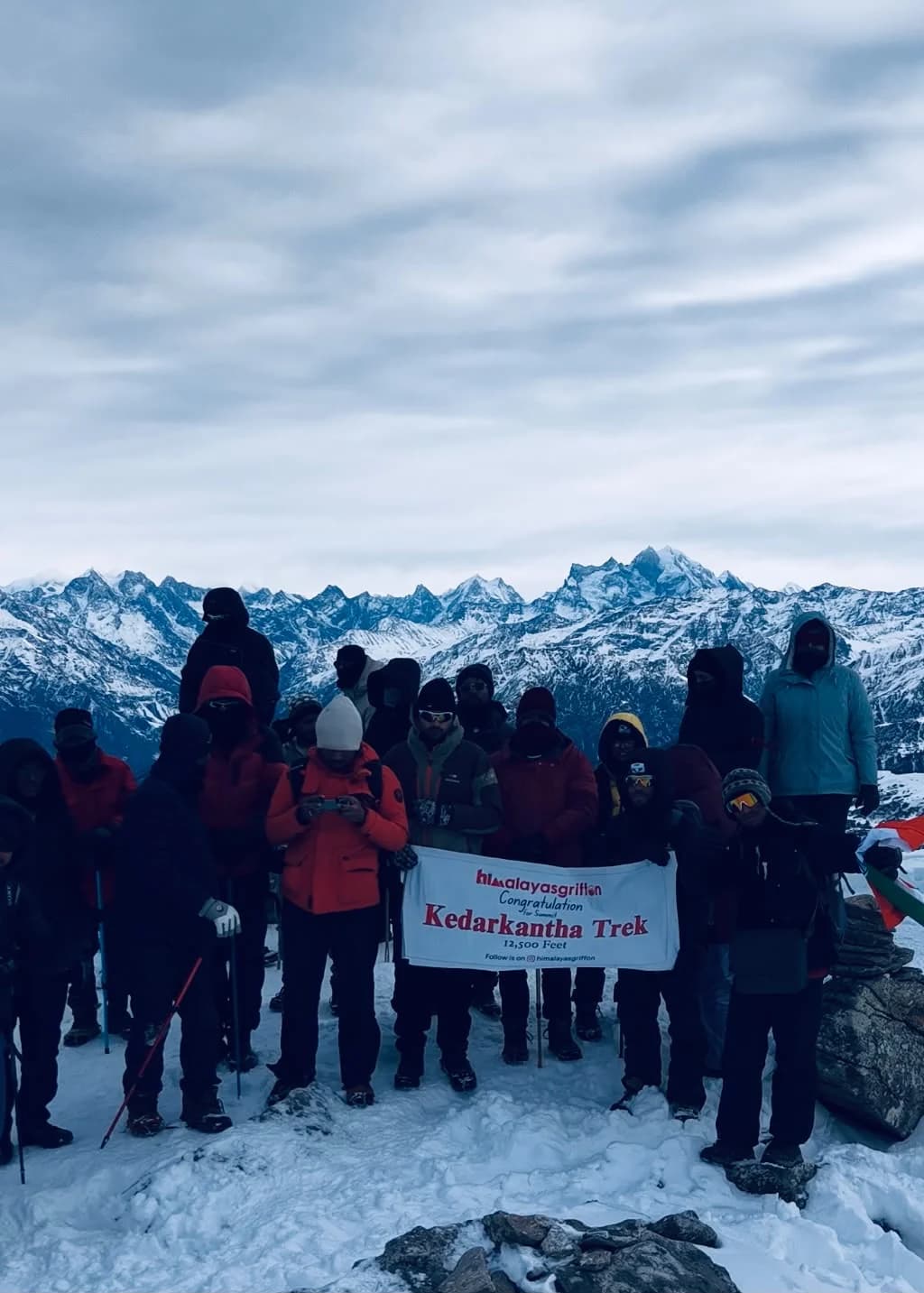
Winter transforms the Himalayas into a spectacular white wonderland, and the Kedarkantha Winter Trek is one of the most popular ways to experience this seasonal beauty. Located in Uttarkashi district, Uttarakhand, the trek begins from the charming mountain village of Sankri and takes you through dense pine forests, peaceful clearings, snow-covered campsites, and breathtaking Himalayan landscapes.
Whether you are planning your first Himalayan trek or looking for a memorable winter adventure with friends, Kedarkantha offers a rewarding combination of natural beauty, adventure, and mountain culture.
At Himalayasgriffon, we operate from Sankri, the gateway to Kedarkantha, with a focus on local expertise, experienced trek leaders, and a well-coordinated trekking experience.
Here are the top reasons why you should experience the Kedarkantha Winter Trek.
1. Experience a Magical Snow-Covered Himalayan Landscape
One of the biggest reasons to visit Kedarkantha in winter is the opportunity to experience snow-covered Himalayan scenery.
During suitable winter conditions, the trekking trail passes through forests covered in snow, white mountain slopes, frozen-looking landscapes, and beautiful open clearings. The contrast between dark pine trees and fresh white snow creates a stunning setting for nature lovers and photographers.
For many trekkers, walking through a snow-covered forest for the first time becomes one of the most memorable parts of the journey.
Best for: Snow lovers, nature enthusiasts, photographers, and first-time winter adventurers.
2. Witness the Sunrise from Kedarkantha Summit
Reaching the Kedarkantha summit is the highlight of the trek.
At approximately 12,500 feet, the summit offers expansive views of the surrounding Himalayan mountain ranges and snow-covered peaks when weather and visibility permit.
The summit push usually begins early in the morning, allowing trekkers to experience the changing colours of the sky as daylight spreads across the mountains. After several hours of climbing, reaching the summit brings a powerful sense of achievement.
The combination of fresh mountain air, dramatic landscapes, and the first light of sunrise makes this experience truly special.
Summit access depends on weather, snow conditions, route safety, and the trek leader’s assessment.
3. A Great Introduction to Himalayan Trekking
Kedarkantha is often considered a suitable introduction to Himalayan trekking for beginners with reasonable fitness.
The classic itinerary generally takes around five days and four nights, including the journey from Dehradun to Sankri and the return journey. The trekking route includes gradual forest trails, uphill sections, campsite approaches, and a challenging summit day.
You do not necessarily need previous trekking experience, but you should be physically prepared for several hours of walking, uneven terrain, cold temperatures, and possible snow.
Beginners should prepare with regular walking, stair climbing, and cardiovascular exercise before the trek.
Why beginners choose Kedarkantha:
- A well-established trekking route.
- Beautiful forest trails and mountain campsites.
- A rewarding summit experience.
- Opportunities to learn basic trekking skills.
- A structured itinerary with experienced trek leaders.
Winter trekking is still physically demanding, and snow or ice can increase the difficulty.
4. Camp Amid Beautiful Himalayan Forests
Kedarkantha is not just about reaching the summit. The journey itself is a major part of the experience.
The trail passes through forests of pine, oak, and other Himalayan vegetation, with open meadows and scenic camping areas along the way.
Popular camping locations on the traditional route include Juda Ka Talab and the Kedarkantha base camp area, subject to the itinerary and local permissions.
Imagine spending an evening surrounded by mountains, enjoying a warm meal after a day on the trail, and watching the sky fill with stars when conditions are clear.
Camping facilities and campsite locations can vary depending on weather, regulations, and operational arrangements.
5. Discover the Beauty of Juda Ka Talab
Juda Ka Talab is one of the best-known scenic spots along the traditional Kedarkantha route.
Surrounded by forest and mountain scenery, this small high-altitude lake is a memorable stop on the journey. In colder periods, parts or all of the lake surface may freeze, depending on temperatures and seasonal conditions.
The area offers wonderful opportunities for landscape photography, peaceful nature observation, and enjoying the quieter side of the Himalayas.
Trekkers should always follow local instructions and avoid walking onto frozen water unless the area has been officially assessed and declared safe.
6. Enjoy Breathtaking Views of the Himalayan Peaks
Kedarkantha offers beautiful mountain panoramas, especially from higher sections of the trail and the summit.
Depending on visibility, trekkers may see prominent Himalayan peaks and ridgelines in the surrounding Garhwal region. Snow-covered slopes, distant summits, and changing light create a memorable mountain experience.
Clear mornings can provide especially impressive views, while clouds, snowfall, and strong winds can reduce visibility.
Even when the summit is covered by clouds, the forest trails and mountain campsites offer plenty of natural beauty to enjoy.
7. Experience Local Himalayan Culture in Sankri
Sankri is more than a starting point. It is a mountain village with a strong connection to Himalayan trekking and local traditions.
The village and its surrounding region provide an opportunity to experience local hospitality, mountain lifestyles, traditional food, and the landscapes of Uttarkashi.
Starting your trek in Sankri also means travelling through the beautiful Tons Valley region, where villages and forests reflect the cultural and natural character of the western Garhwal Himalayas.
At Himalayasgriffon, our roots in the Sankri region help us bring local knowledge and a community-focused approach to the trekking experience.
By choosing a responsible local operator, trekkers can help support local guides, staff, accommodation providers, and mountain communities.
8. Capture Incredible Winter Photography
If you enjoy photography, Kedarkantha offers a variety of subjects throughout the journey.
You can photograph:
- Snow-covered pine forests.
- Mountain trails and open clearings.
- Sunrise and sunset colours.
- Traditional mountain villages.
- Campsites surrounded by Himalayan scenery.
- Snow-covered peaks and ridgelines.
- Star-filled skies on clear nights.
A phone camera can capture wonderful memories, while a dedicated camera offers additional flexibility for landscapes and low-light photography.
Carry spare batteries, protect your electronics from moisture and cold, and keep your equipment accessible without compromising your safety on the trail.
9. Make Unforgettable Memories with Friends and Family
A Himalayan winter trek is an opportunity to step away from everyday routines and spend meaningful time outdoors.
Walking together, sharing meals, encouraging each other on uphill sections, and celebrating at the summit can create lasting memories.
Kedarkantha is popular with groups of friends, couples, solo travellers joining group departures, and people looking for a distinctive winter holiday.
However, every participant should be comfortable with cold weather, physical exertion, shared accommodation arrangements, and the possibility of itinerary changes.
10. Enjoy a Complete Himalayan Adventure in Around Five Days
The classic Kedarkantha itinerary combines road travel, village experiences, forest trekking, camping, and a summit attempt in a relatively compact trip.
A typical itinerary is:
Day 1: Dehradun to Sankri
Travel through the scenic mountain roads of Uttarakhand and reach Sankri, subject to road and weather conditions.
Day 2: Sankri to Juda Ka Talab
Begin the trek through forest trails and climb towards the campsite.
Day 3: Juda Ka Talab to Kedarkantha Base Camp
Continue through the forest and higher mountain terrain, enjoying the changing landscape.
Day 4: Summit Attempt and Descent
Start early for the summit attempt, subject to safety conditions, and descend according to the trek plan.
Day 5: Sankri to Dehradun
Return to Dehradun by road.
Actual routes, camping locations, and timings may change according to weather, permits, local regulations, and the operator’s safety assessment.
11. Experience Winter Adventure with Local Trek Experts
A winter trek requires more than a beautiful route. Proper planning, suitable equipment, weather awareness, and experienced leadership are essential.
Himalayasgriffon operates from Sankri and focuses on providing a coordinated trekking experience with local knowledge and on-ground support.
Our approach emphasises:
- Experienced trek leaders and local guides.
- Clear pre-trek information and preparation guidance.
- Coordination of accommodation, meals, and transport as per the selected package.
- First-aid preparedness and appropriate emergency planning.
- Respect for local communities and the Himalayan environment.
- Responsible decisions when weather or trail conditions become unsafe.
The summit is never more important than the safety of the group. Trek plans may be adjusted or a summit attempt cancelled when conditions require it.
12. When Is the Best Time for the Kedarkantha Winter Trek?
The winter season generally runs from December through March, although snow conditions vary considerably from year to year.
December: Early winter atmosphere, with snowfall dependent on weather conditions.
January: Often a popular period for winter trekking, with opportunities for snow-covered trails when snowfall has occurred.
February: Can offer beautiful winter scenery and cold-weather trekking conditions.
March: Conditions gradually transition towards spring, though snow may remain at higher elevations.
Snowfall, trail conditions, temperatures, and summit accessibility cannot be guaranteed for any particular departure date.
Before booking, check the latest weather forecast, local trail status, and the operator’s equipment and safety arrangements.
What Should You Pack for the Kedarkantha Winter Trek?
Winter conditions require appropriate clothing and equipment. Essential items generally include:
- Waterproof trekking shoes with good grip.
- Thermal base layers and warm insulating layers.
- A suitable winter jacket.
- Waterproof outerwear.
- Warm gloves, woollen socks, and a cap.
- Sunglasses and sunscreen.
- A headlamp or torch with spare batteries.
- A reusable water bottle.
- Personal medication and basic toiletries.
- A comfortable backpack and rain cover.
The exact equipment requirements depend on the weather forecast, snow conditions, and package inclusions. Confirm which items are provided by your trek operator and which you must bring or rent.
Why Book Your Kedarkantha Winter Trek with Himalayasgriffon?
Choosing the right trek operator can make a significant difference to your winter trekking experience.
Himalayasgriffon is based in Sankri, the gateway to Kedarkantha, and brings a local perspective to trip planning and on-ground coordination.
We believe a good trekking experience should combine mountain adventure with responsible operations, clear communication, experienced guidance, and respect for the communities that make Himalayan travel possible.
Before booking, we encourage every trekker to review the itinerary, inclusions and exclusions, accommodation arrangements, safety procedures, cancellation policy, and equipment requirements.
Our goal is to help you experience the Himalayas with confidence, preparation, and a deeper appreciation for the mountains.
Frequently Asked Questions
Is Kedarkantha suitable for beginners?
Yes, Kedarkantha can be suitable for beginners who have reasonable fitness and prepare properly. Winter conditions, steep sections, cold temperatures, and the summit day make physical preparation essential.
Is there guaranteed snowfall on the Kedarkantha Trek?
No. Snowfall depends on seasonal weather patterns and cannot be guaranteed. Check current conditions before your departure.
How many days are required for the Kedarkantha Trek?
The classic itinerary is generally five days and four nights, including travel from Dehradun. Additional time may be needed depending on transport schedules and weather disruptions.
What is the maximum altitude of Kedarkantha?
The summit is commonly listed at approximately 12,500 feet (3,810 metres) above sea level.
Do I need previous trekking experience?
Previous trekking experience is not always necessary, but you should be comfortable walking for several hours and be prepared for winter mountain conditions.
Is Kedarkantha safe in winter?
Winter trekking involves risks associated with cold, snow, ice, altitude, and changing weather. Safety depends on preparation, equipment, route conditions, experienced leadership, and following local guidance. No operator can guarantee completely risk-free trekking.
What should I check before booking?
Confirm the trek itinerary, departure dates, total price, transportation, accommodation, meals, equipment, permits, safety arrangements, cancellation policy, and any additional charges.
Book Your Kedarkantha Winter Trek
The Kedarkantha Winter Trek offers the chance to experience snow-covered forests, peaceful mountain campsites, local Himalayan culture, and a rewarding summit journey.
If you are planning a winter escape, start preparing early, choose a responsible trek operator, and arrive ready for the conditions of the mountains.
Ready to experience Kedarkantha with Himalayasgriffon?
Visit: https://www.himalayasgriffon.com/treks/kedarkantha-trek
Himalayasgriffon — Trusted by Trekkers, Inspired by Mountains